Key takeaway
Between 5'4" and 5'10", a standard 57" cue fits naturally. Taller players go 58" or add an extension, and shorter players shouldn't fear a shorter cue.
In this guide
Know your cue
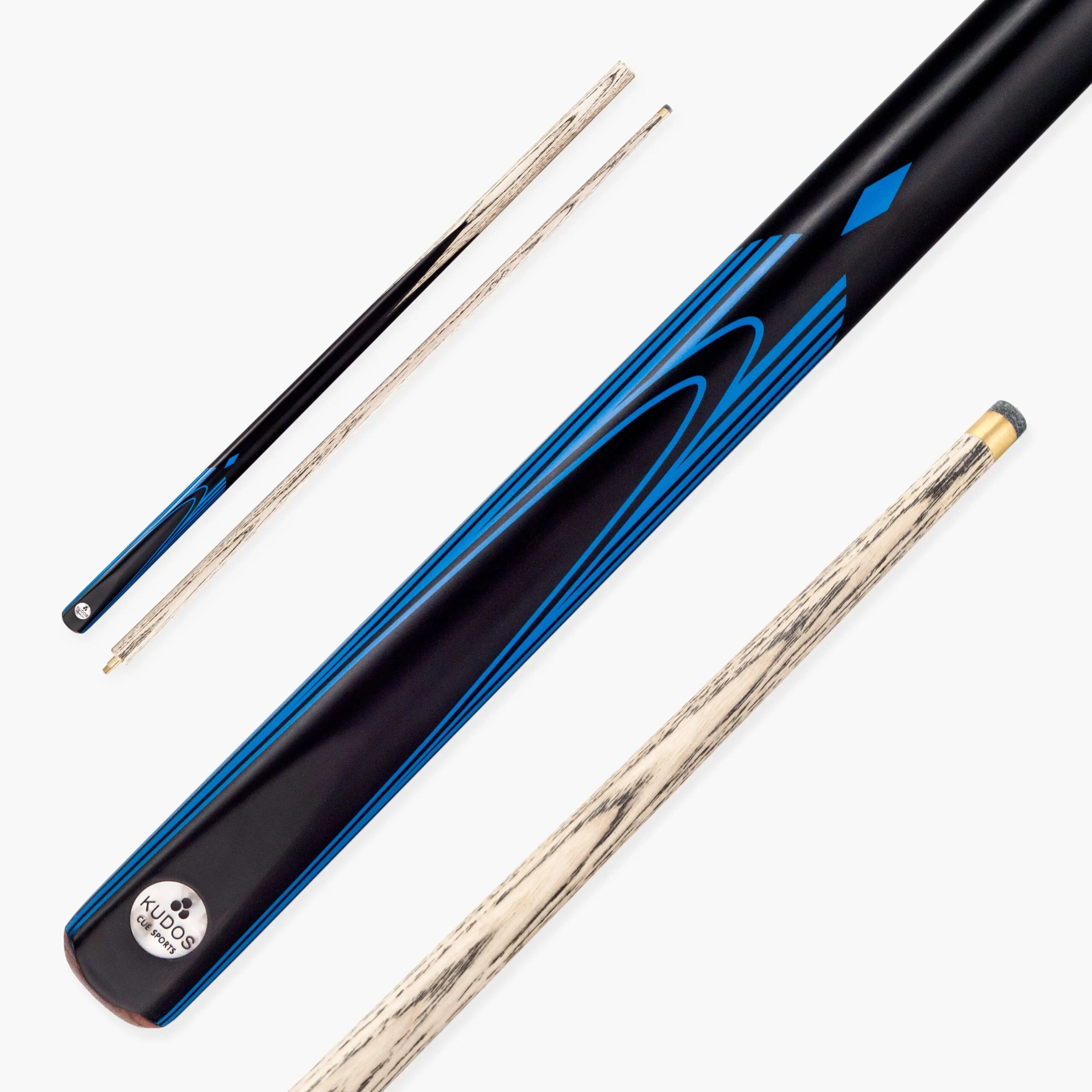
Six parts matter: the tip strikes the ball, the ferrule protects the shaft, the shaft delivers the stroke, the joint splits the cue for carrying, the butt carries the weight, and the bumper takes the knocks. Length is measured tip to bumper.
Cue anatomy. Joint position and construction vary by cue.
Find your band
Standard cues are 57" because standard heights are 5'4" to 5'10". Above that band, add an inch or plan on an extension; below it, junior and intermediate lengths from 48" exist for exactly this reason and are not a compromise.
The at-the-table test
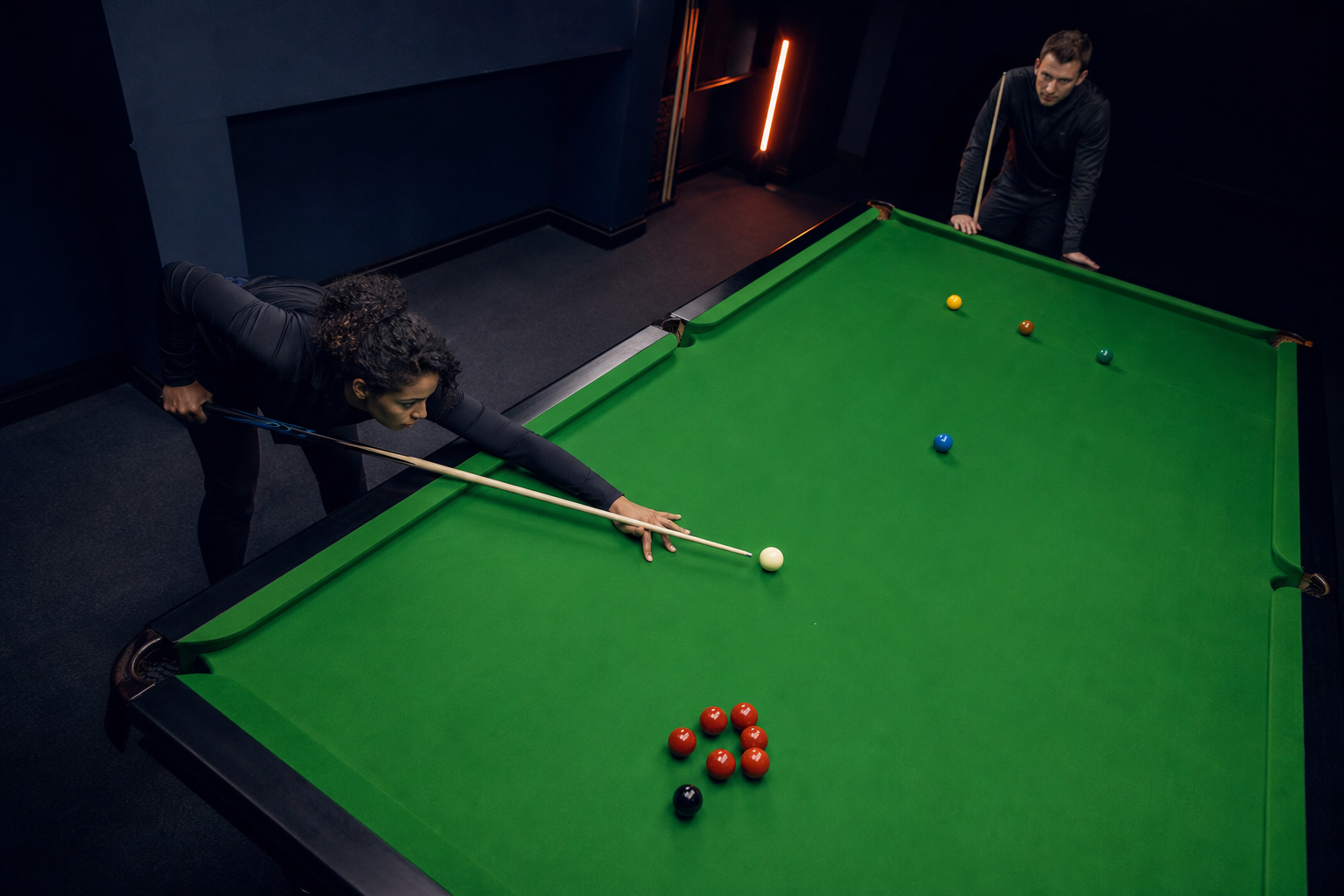
Set your bridge hand on the cloth as if addressing the cue ball. Your grip hand should hold the cue just behind its balance point with a relaxed, roughly right-angled elbow. Stretching to reach, or gripping far up the butt, means the length is wrong.
Extensions, briefly
A screw-in extension adds reach for tall players and for shots at the far cushion. It lives in your case, weighs a few ounces and fits the butt thread. If you're over 6'2", buying the extension with the cue is cheaper than replacing the cue later.